
Are You Dense Snow Globes
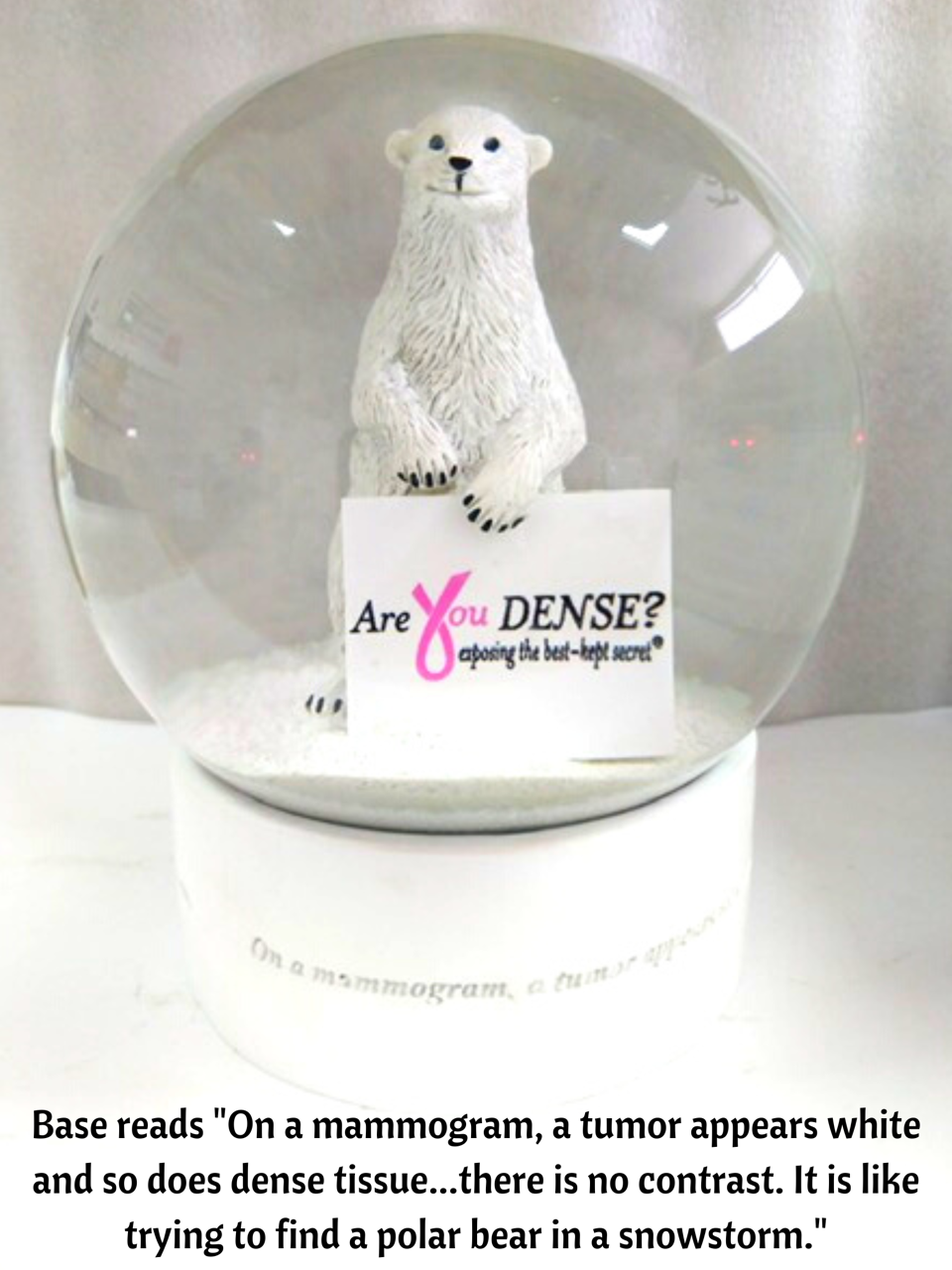
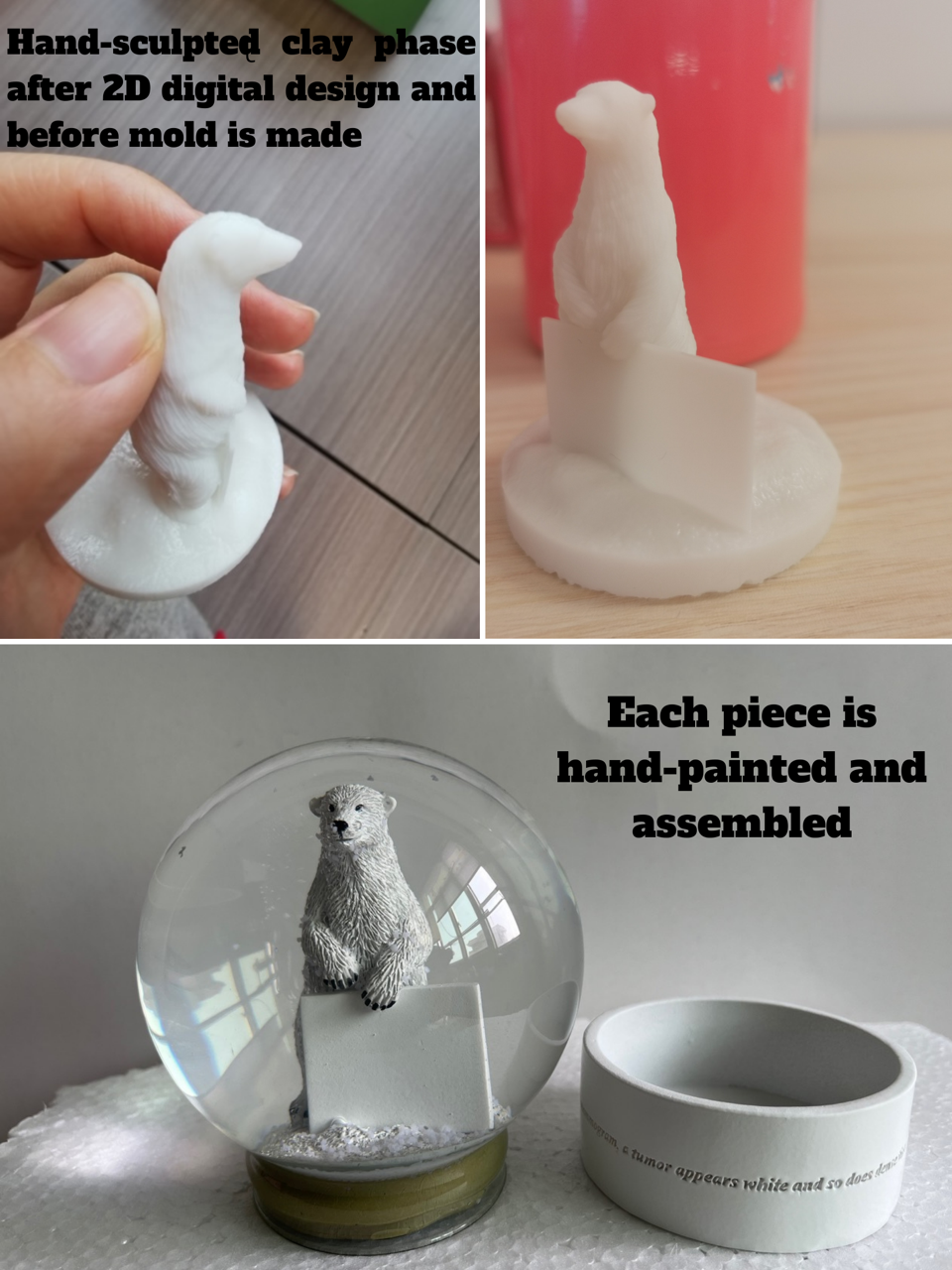
Are You Dense snow globe: a polar bear holding an "Are You Dense? exposing the best-kept secret" sign. The base reads "On a mammogram, a tumor appears white and so does dense tissue...there is no contrast. It is like trying to find a polar bear in a snowstorm." Making the snow globe: the polar bear is hand-sculpted in clay after a 2D digital design, before the mold is made; each piece is hand-painted and assembled

To purchase a snow globe please click the donate button below.

(The snow globes are $75 each, so if you would like more than one, click the appropriate box on the donation form)

Donate Now

Are You Dense? Fact #1: Breast density is one of the strongest predictors of the failure of mammography screening to detect cancer.

Are You Dense? Fact #2: Two-thirds of pre-menopausal women and 40% of post-menopausal women have dense breast tissue.

Are You Dense? Fact #3: Adding more sensitive tests to mammography significantly increase detection of invasive cancers that are small and node negative.

Are You Dense? Fact #4: American College of Radiology describes women with "Dense Breast Tissue" as having a higher than average risk of Breast Cancer.

Are You Dense? Fact #5: While a mammogram detects 98% of cancers in women with fatty breasts, it finds only 48% in women with dense breasts.

Are You Dense? Fact #6: A woman at average risk and a woman at high risk have an EQUAL chance of having their cancer masked by mammogram.

Are You Dense? Fact #7: Women with dense breasts who had breast cancer have a four times higher risk of recurrence than women with less-dense breasts.

Are You Dense? Fact #8: A substantial proportion of Breast Cancer can be attributed to high breast density alone.

Are You Dense? Fact #9: Cancer turns up five times more often in women with extremely dense breasts than those with the most fatty tissue.

Are You Dense? Fact #10: There are too many women who are unaware of their breast density, believe their “Happy Gram” when it reports no significant findings and are at risk of receiving a later stage cancer diagnosis.