
Brittany's Story
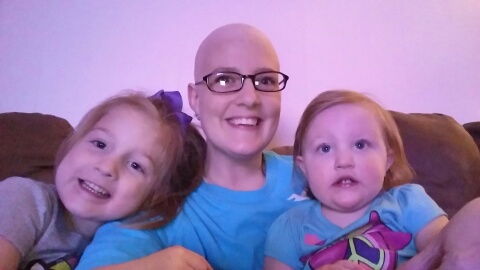
| Name: | Brittany |
|---|---|
| State: | Virginia |
| Date of diagnosis: | October 1, 2014 |
| Age at time of diagnosis: | 29 |
| Stage of diagnosis: | 1a |
| Date of mammogram: | Sept. 16. 2014 |
| How was cancer diagnosed: | Felt by me, detected by ultrasound |
Brittany's Story: At 29 years old and with no family history, it is not even recommended for me to have an annual mammogram. Twenty-nine-year-old breasts are usually pretty dense, anyway, making mammograms almost obsolete. I had a slight shooting pain radiate through my breast and found a lump in my right breast and, fortunately, my first screening was an ultrasound. On September 16th, I had a follow-up mammogram that was only dubbed as "inconclusive" versus "normal" due to the fact that I had a palpable lump and an abnormal ultrasound. "Cancer doesn't hurt" and "You're too young" were told by me by several health care providers. If only they were right. A biopsy then confirmed the worst: I had invasive ductal breast cancer. After my mastectomy, pathology results showed that my tumor was 1.7 cm and the cancer had not spread to my lymph nodes. I was diagnosed as stage 1A, Triple Negative Breast Cancer. I had a mastectomy and am completing chemotherapy. To me, however, the most important aspect of this is my two daughters,currently ages four and one and a half. Because of my diagnosis at such a young age, it is now recommended for them to start breast cancer screenings at 19 years old. With my new knowledge about mammograms and dense breasts, I will be able to advocate for better screening methods for them when mammograms appear "normal" on their young, dense breasts.
Back to Stories