
Jodie's Story
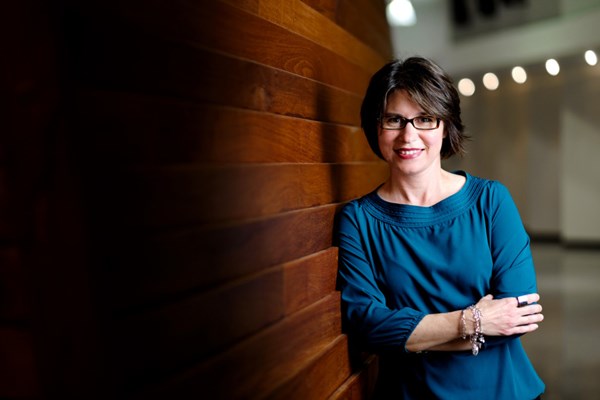
| Name: |
Jodie |
|---|---|
| State: | Georgia |
| Date of diagnosis: |
January 19, 2017 |
| Age at time of diagnosis: |
42 |
| Stage of diagnosis: | Stage 2 |
| Last 'NORMAL' Mammogram: |
Within the Year |
| How was cancer diagnosed? | by Physician/confirmed by Ultrasound & MRI |
I was told several years ago that I have dense tissue with a lot of cysts, which is why I was told to start getting mammograms around age 37. No one ever mentioned to me what having dense breasts meant. They just always did a mammogram and said it was normal.
My friend was diagnosed in November and I decided I needed to start doing my self exams. However, since I have so many cysts, all my breasts feel lumpy. I was due for my annual mammo, so I asked my doctor to just feel my breasts and tell me what's normal so I could have a baseline for self exams. She felt something and sent me to a breast care specialists place (different from where I was getting my annual mammo).
The breast care specialists did a mammogram and didn't see anything - it was NORMAL. Then they did an ultrasound and saw something on the left breast. A biopsy confirmed invasive cancer (yet still invisible on mammo). I also had an MRI, which revealed two small spots on the right which were positive for cancer including lymph node metastasis.
I had a double mastectomy - the pathology report concluded bilateral invasive cancer - 5CM and 2CM and Both INVISIBLE BY MAMMOGRAM. Doctors say both cancers were there for several years which went undetected by several normal mammograms. If I had been getting ultrasounds it would have been discovered at an earlier stage. So all this time I had a tumor growing that couldn't be seen on the mammo, only on the ultrasound on the left and a 5 cm tumor on the right by MRI. How is that possible?
I will be meeting with my oncologist soon for my treatment plan. My breast care doctor said I would need chemo and radiation given the size of the tumor and the fact that it was in a lymph node on the right.
I'm really nervous about the next steps and the unknown. I'm also nervous about it spreading to other parts of the body. I have no history of breast cancer, I eat healthy and work out 5x a week. My health care providers should have told me years ago that I needed another detection method other than just the mammogram. Had I known what dense tissue meant, I would have pushed for more testing.
I'm so glad I found your website because it gives me hope that I can beat this. It made me feel better to know that others have stories similar to mine.